
Primary Ashtanga Yoga: A Complete Guide
Ashtanga Yoga is one of the most dynamic and structured forms of yoga. It is famous for its flowing sequences, precise postures, and deep breathwork. Many people see Ashtanga as challenging, but it can be very rewarding—even for beginners. The Primary Series, known as Yoga Chikitsa, is the foundation. It helps cleanse the body, improve flexibility, and build strength. This article explains everything you need to know about Primary Ashtanga Yoga, from its history to its practice, benefits, and tips for getting started.
The Origin And Philosophy Of Ashtanga Yoga
Ashtanga Yoga comes from ancient India. The word “Ashtanga” means “eight limbs,” based on the yoga path described by Patanjali in the Yoga Sutras. The eight limbs are:
- Yama (moral guidelines)
- Niyama (personal discipline)
- Asana (posture)
- Pranayama (breath control)
- Pratyahara (withdrawal of senses)
- Dharana (concentration)
- Dhyana (meditation)
- Samadhi (union with the divine)
The modern practice of Ashtanga Yoga was developed by Sri K. Pattabhi Jois in the 20th century. He learned from his teacher, Tirumalai Krishnamacharya, and organized the practice into series of postures. Each series is designed to purify the body and mind. The Primary Series is the first step and focuses on healing and detoxifying.
What Is The Primary Series?
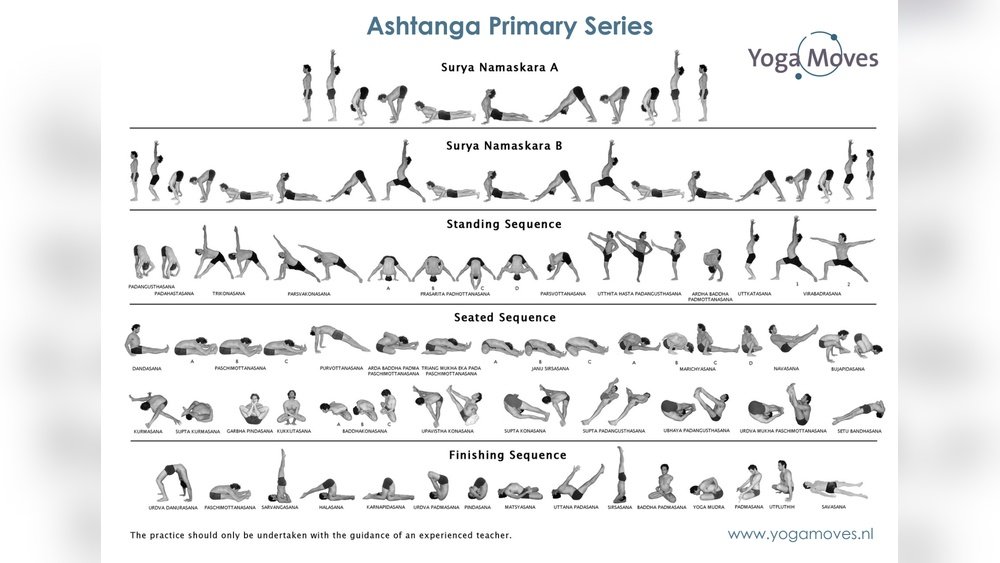
The Primary Series in Ashtanga Yoga is called Yoga Chikitsa, meaning “yoga therapy.” It is made up of a fixed sequence of postures (asanas) that are linked by breath and movement. The aim is to build strength, increase flexibility, and remove toxins from the body. The sequence is always the same, which helps practitioners progress steadily.
Structure Of The Primary Series
The Primary Series includes several sections:
- Opening sequence (Sun Salutations)
- Standing postures
- Seated postures
- Finishing sequence
Each posture is connected by vinyasa—movement coordinated with the breath. The practice can take 60–90 minutes, depending on the speed and experience.
Why Fixed Sequences Matter
A fixed sequence lets practitioners measure their progress and notice improvements. It also helps create discipline and routine. Many beginners overlook the importance of repeating the same postures every day. However, this repetition is key for building skill and confidence.
.webp)
Credit: myyogateacher.com
The Key Postures Of The Primary Series
The Primary Series contains around 75 postures. Here are the main groups and examples:
1. Sun Salutations (surya Namaskara)
These are the warm-up movements. There are two types:
- Surya Namaskara A (5 rounds)
- Surya Namaskara B (5 rounds)
Each round includes forward folds, plank, upward dog, and downward dog. This sequence activates the muscles and increases blood flow.
2. Standing Postures
Standing postures build balance and stability. Examples include:
- Padangusthasana (big toe pose)
- Trikonasana (triangle pose)
- Utthita Parsvakonasana (extended side angle)
- Prasarita Padottanasana (wide-legged forward bend)
These postures challenge the legs and hips and prepare the body for deeper movements.
3. Seated Postures
Seated postures focus on flexibility and core strength. Some key examples:
- Paschimottanasana (seated forward bend)
- Janu Sirsasana (head-to-knee pose)
- Ardha Baddha Padma Paschimottanasana (half-bound lotus forward bend)
- Marichyasana series (twisting postures)
These asanas stretch the spine, hamstrings, and hips.
4. Finishing Sequence
The finishing sequence helps calm the mind and restore balance. Key postures include:
- Sarvangasana (shoulder stand)
- Halasana (plow pose)
- Sirsasana (headstand)
- Padmasana (lotus pose)
- Savasana (corpse pose)
This part is crucial for relaxation and meditation.
Detailed Comparison Of Ashtanga Primary Series Sections
Here is a comparison of the main sections in the Primary Series:
| Section | Main Purpose | Typical Duration | Examples of Postures |
|---|---|---|---|
| Sun Salutations | Warm-up, activate body | 10–15 min | Surya Namaskara A & B |
| Standing Postures | Balance, strength | 15–20 min | Trikonasana, Prasarita Padottanasana |
| Seated Postures | Flexibility, core | 25–30 min | Paschimottanasana, Marichyasana |
| Finishing Sequence | Relaxation, meditation | 10–15 min | Sarvangasana, Savasana |
The Role Of Breath And Movement
A unique feature of Ashtanga is vinyasa—the connection of breath with movement. Each movement has a specific breath pattern. For example, inhale when lifting, exhale when folding. The breath used is called Ujjayi breathing. It is deep and controlled, producing a soft sound in the throat.
Drishti (gaze) is another important concept. For each posture, there is a focus point for the eyes. This helps build concentration and balance.
Many beginners do not realize the importance of breath and gaze. Focusing only on the physical movements can reduce the benefits. The true power of Ashtanga comes from linking mind, breath, and body together.

Credit: www.yogamoves.nl
Benefits Of Practicing Primary Ashtanga Yoga
Practicing the Primary Series regularly offers many benefits. Some are obvious, but others are often missed:
- Physical strength: The sequence builds strong muscles, especially in the legs, arms, and core.
- Flexibility: Repeated stretching increases range of motion in the joints.
- Detoxification: Sweating and deep breathing help remove toxins.
- Mental clarity: The focus on breath and gaze calms the mind.
- Discipline: Practicing the same sequence every day develops routine.
- Injury prevention: The sequence is designed to balance all muscle groups, reducing risk.
- Improved posture: Many postures correct poor alignment in the body.
Hidden Benefits
Two benefits many beginners miss are:
- Nervous system balance: The finishing sequence and breathwork help regulate stress and anxiety.
- Digestive health: Twisting and forward bends stimulate the organs, improving digestion.
Common Mistakes And How To Avoid Them
Starting Ashtanga Yoga can be overwhelming. Here are some common mistakes and tips to avoid them:
- Rushing the sequence: Many people try to finish quickly. Move slowly and focus on each posture.
- Ignoring breath: Forgetting to use Ujjayi breathing reduces the benefits. Practice the breath even if you cannot do all postures.
- Comparing with others: Ashtanga is personal. Progress is different for everyone. Focus on yourself.
- Skipping postures: Always follow the sequence. Skipping steps prevents proper development.
- Overdoing it: Trying to force the body can cause injury. Respect your limits and listen to your body.
Practical Tips For Beginners
If you are new to Ashtanga, these tips will help:
- Start with Sun Salutations only if the full series feels too difficult.
- Attend a Mysore-style class, where you practice at your own pace with a teacher.
- Use a yoga mat with good grip to prevent slipping.
- Learn the names of postures—it helps follow the sequence.
- Practice at the same time every day to build routine.
- Keep a journal of your progress. Note improvements and challenges.
- If possible, practice with a community. It increases motivation.
Comparison: Guided Vs Mysore Practice
Practicing Ashtanga can be done in two main ways. Here’s how they compare:
| Practice Type | Features | Best for | Drawbacks |
|---|---|---|---|
| Guided Class | Teacher leads sequence | Beginners, learning structure | Less personal pace |
| Mysore Style | Self-paced, teacher assists | Independent learners | Can feel lonely at first |
How To Progress In Primary Ashtanga Yoga
Improvement in Ashtanga Yoga is gradual. You do not move to the next series until you master the Primary Series. Here’s how to progress:
- Consistency: Practice at least 4–6 days a week.
- Patience: Do not rush to advanced postures. Master basics first.
- Adjustment: Teachers may give physical adjustments. Accept these—they help correct alignment.
- Self-awareness: Notice how your body and mind change over time.
- Rest days: Take rest on moon days (full and new moon) and during illness or injury.
Many students want to advance quickly, but the true benefit comes from slow, steady practice.
Primary Ashtanga Yoga For Different Age Groups
Ashtanga Yoga can be adapted for different ages. Young people can do the full sequence. Older adults may need to skip difficult postures or use props.
Children:
- Focus on playful movement and simple postures.
- Avoid strong twists or headstands.
Seniors:
- Use blocks or straps for support.
- Practice gentle breathing and basic postures.
Everyone can benefit from Ashtanga, but it is important to listen to your own body.
How To Find A Reliable Teacher Or School
Choosing a good teacher makes a big difference. Look for:
- Certification from a recognized Ashtanga institution.
- Experience teaching different levels.
- A focus on safety and alignment.
Some well-known schools include the KPJAYI in Mysore, India. For more information on the official lineage, visit Wikipedia.

Credit: www.ashtangayogaleeds.com
Frequently Asked Questions
What Makes Ashtanga Yoga Different From Other Styles?
Ashtanga uses a fixed sequence of postures and links every movement with breath. This creates a dynamic, flowing practice. Other styles may change the sequence or focus more on relaxation.
Can Beginners Practice The Primary Series?
Yes, but it can be challenging. Beginners should start with the easier postures and build up slowly. It is best to practice with a teacher who can guide you.
How Often Should I Practice Ashtanga Yoga?
Traditionally, Ashtanga is practiced 6 days a week, with rest on moon days. Beginners can start with 2–3 days and increase as they gain confidence.
Is Ashtanga Yoga Safe For People With Injuries?
Ashtanga can be adapted for injuries, but it is important to consult a doctor and inform your teacher. Some postures may need to be skipped or modified.
What Equipment Do I Need?
A non-slip yoga mat is essential. Some people use blocks, straps, or blankets for support. Comfortable clothing that allows movement is best.
Ashtanga Yoga’s Primary Series offers a powerful way to improve your health and well-being. With discipline, patience, and the right guidance, anyone can benefit from this practice. Remember to focus on breath, movement, and self-awareness. The journey in Ashtanga is personal and lifelong—enjoy each step.