

Yoga is more than stretching and breathing. It’s a journey of mind and body. For yoga teachers, guiding students is rewarding, but it comes with responsibility. Accidents can happen, even in a peaceful studio. Someone might pull a muscle, fall, or misunderstand an instruction. As a yoga teacher, you need protection for yourself, your students, and your business. That’s where insurance for yoga teachers comes in.
Why Yoga Teachers Need Insurance
Many yoga teachers believe their classes are safe. After all, yoga is gentle, right? But injuries can occur in any setting. A student may twist their ankle, or claim you gave harmful advice. If you rent a studio, someone could damage the property.
Even online classes carry risks, like a student hurting themselves while following your instructions.
Insurance gives you peace of mind. It protects your income and reputation. If something goes wrong, you won’t have to pay out of pocket. Instead, your insurance company helps handle legal claims, medical bills, or property damage. Without insurance, a single accident could ruin your career.
Types Of Insurance Yoga Teachers Need
Not all policies are the same. The right insurance depends on your teaching style, location, and business setup. Let’s look at the most important types:
Professional Liability Insurance
This is the main coverage for yoga teachers. Also called errors and omissions insurance or malpractice insurance, it protects you if a student claims you caused injury or loss. For example, if someone says your advice led to a pulled muscle, this insurance covers legal costs and settlements.
General Liability Insurance
This covers accidents that happen in your studio or class space. If a student slips on a wet floor, or someone trips over a yoga mat, this insurance helps with medical bills and legal claims. It also covers property damage, like breaking a mirror or damaging a rented space.
Product Liability Insurance
If you sell yoga products, like mats or accessories, you need product liability coverage. It protects you if a product causes harm. For example, if a mat you sell breaks and injures a student, this insurance helps pay for claims.
Property Insurance
If you own a studio, property insurance covers fire, theft, or natural disasters. It helps repair or replace equipment, furniture, and the building itself.
Workers’ Compensation
If you employ other teachers or staff, workers’ compensation covers their injuries at work. It’s often required by law if you have employees.
Cyber Liability Insurance
For teachers who run online classes, cyber insurance protects against data breaches and online risks. If a student’s information is stolen, or your website is hacked, this policy helps with recovery costs and legal claims.
Comparison Of Insurance Types
Here’s a quick summary of the main insurance types for yoga teachers:
| Insurance Type | What It Covers | Who Needs It |
|---|---|---|
| Professional Liability | Claims of negligence or injury | All yoga teachers |
| General Liability | Accidents, property damage | Studio owners, freelance teachers |
| Product Liability | Harm from products sold | Teachers selling yoga products |
| Property Insurance | Fire, theft, natural disasters | Studio owners |
| Workers’ Compensation | Employee injuries | Employers |
| Cyber Liability | Data breaches, hacking | Online class providers |
What Does Insurance Cost For Yoga Teachers?
Insurance prices depend on your coverage, location, experience, and business size. Here are some average costs in the US:
- Professional liability insurance: $150 to $500 per year
- General liability insurance: $200 to $600 per year
- Product liability insurance: $100 to $300 per year
- Property insurance: $500 to $2,000 per year (for studio owners)
- Workers’ compensation: Varies, based on payroll and state requirements
- Cyber liability insurance: $100 to $400 per year
Most solo yoga teachers pay between $300 and $1,000 a year for basic coverage. If you run a studio or offer many services, your costs may be higher.
Comparing Insurance Costs
To help you see the differences, here’s a simple table of average yearly costs:
| Insurance Type | Average Yearly Cost |
|---|---|
| Professional Liability | $150–$500 |
| General Liability | $200–$600 |
| Product Liability | $100–$300 |
| Property Insurance | $500–$2,000 |
| Cyber Liability | $100–$400 |
Choosing The Right Insurance Policy
Finding the right policy can feel confusing. Here are practical steps to help you:
- Assess Your Risks: Think about your teaching style. Do you teach in studios, outdoors, or online? Do you sell products? Are you hiring staff? Make a list of possible risks.
- Check Legal Requirements: Some states or studios require specific insurance. Always check local laws and studio rules.
- Compare Providers: Look for companies specializing in yoga or fitness insurance. Read reviews and ask other teachers for recommendations.
- Understand the Coverage: Don’t just look at price. Check what is included. Does the policy cover all your activities? Are there exclusions?
- Choose Coverage Limits: Higher limits mean more protection but cost more. For most yoga teachers, $1 million per claim is standard.
- Bundle Policies: Some insurers offer packages for multiple coverages. Bundling can save money and simplify management.
Sample Comparison: Two Popular Yoga Teacher Insurance Policies
Here’s a direct comparison of two sample policies for yoga teachers:
| Policy Feature | Provider A | Provider B |
|---|---|---|
| Annual Cost | $350 | $475 |
| Professional Liability Limit | $1 million | $2 million |
| General Liability Limit | $1 million | $1 million |
| Product Liability Included? | No | Yes |
| Cyber Liability | No | Yes |
| Coverage for Online Classes | Yes | Yes |
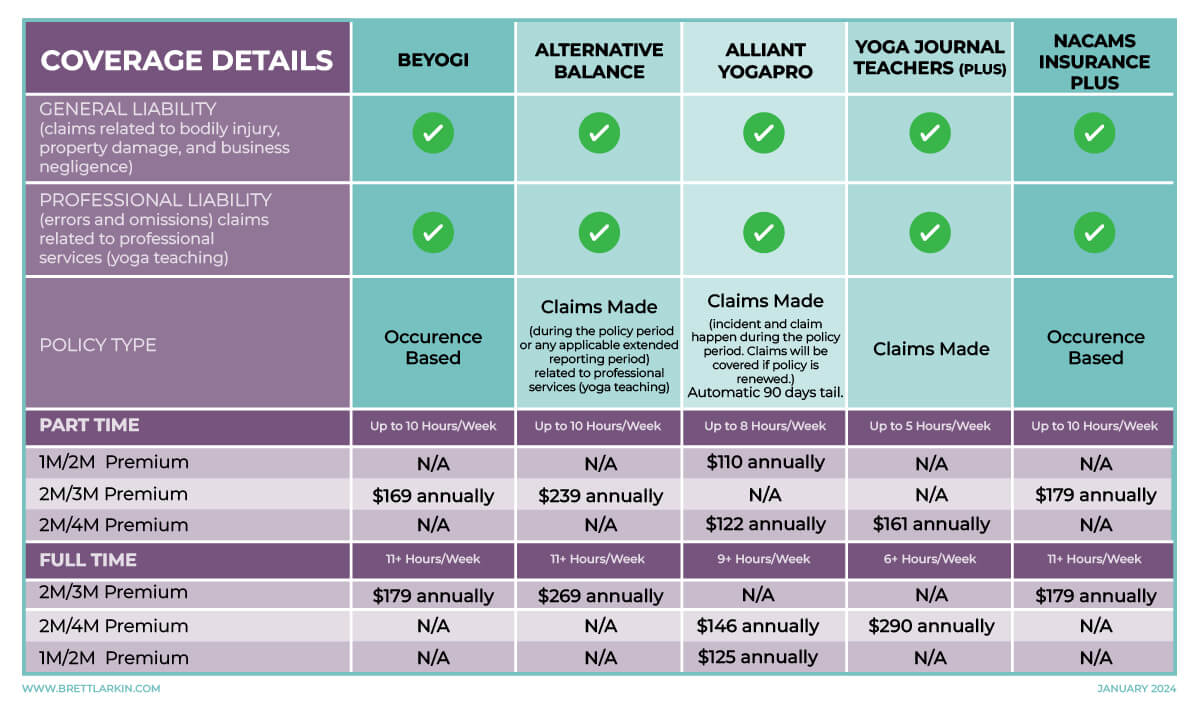
Credit: www.brettlarkin.com
Common Mistakes Yoga Teachers Make With Insurance
Even experienced teachers can make errors when buying insurance. Here are some mistakes to avoid:
- Skipping insurance: Some teachers think they don’t need coverage, especially if they teach small groups or part-time. But accidents can happen anytime.
- Choosing low coverage limits: Saving money with a low limit may leave you exposed to big losses.
- Not reading exclusions: Some policies don’t cover certain activities, like aerial yoga or hot yoga. Always check the details.
- Missing renewals: Insurance must be renewed every year. Forgetting to renew can leave you unprotected.
- Assuming studio coverage: If you teach in a studio, don’t rely only on their insurance. It may not cover you as an individual.
Real-life Examples And Data
Let’s look at some real cases:
- Case 1: A yoga student slipped on a wet floor and broke her wrist. The teacher had no insurance. She paid nearly $9,000 in medical bills and legal fees.
- Case 2: An online yoga teacher was sued when a student hurt their back following a recorded class. The insurance company paid $12,000 in settlement and legal costs.
- Case 3: A teacher sold branded yoga mats. One mat tore during a pose, causing a fall. The teacher’s product liability insurance covered $5,000 in damages.
According to the Yoga Alliance, about 1 in 20 yoga teachers face a claim or lawsuit in their career. Most claims are for minor injuries, but some can be serious or expensive.

Credit: beyogi.com
Practical Tips For Yoga Teachers
Insurance is important, but prevention is better. Here’s how you can reduce risks:
- Give clear instructions: Always explain poses and safety tips. Encourage students to listen to their bodies.
- Screen your students: Ask about health conditions before class. Adjust poses for beginners or those with injuries.
- Keep your space safe: Remove hazards like wet floors, clutter, or loose mats.
- Document everything: Keep records of class attendance, waivers, and injuries.
- Stay updated: Renew your insurance on time. Review your policy every year to match your teaching style.
- Consider waivers: Have students sign liability waivers. While not foolproof, waivers show you warned them of risks.
Non-obvious Insights
- Many teachers don’t realize that insurance often covers online classes. As digital yoga grows, this protection is essential.
- If you teach in multiple locations, you may need additional insured certificates for each venue. Studios may require proof before letting you teach.
Where To Find Yoga Teacher Insurance
Many insurance companies offer yoga-specific coverage. Look for those with experience in fitness and wellness. Yoga Alliance members can access special deals. Ask colleagues for recommendations and read customer reviews.
One helpful resource is the Yoga Alliance website. They explain insurance options and offer discounts to registered teachers.

Credit: nacams.org
Frequently Asked Questions
What Is The Most Important Insurance For Yoga Teachers?
The main coverage is professional liability insurance. It protects you from claims of injury or negligence during your classes.
Do I Need Insurance If I Only Teach Online Yoga Classes?
Yes. Even online students can be injured while following your instructions. Cyber liability insurance is also important for digital classes.
Does Studio Insurance Cover Me As A Teacher?
Usually, studio insurance covers the space and business, not individual teachers. Always check and get your own policy.
Are Yoga Teacher Insurance Policies Expensive?
Most solo teachers pay between $300 and $1,000 per year. Costs depend on coverage, teaching style, and location.
What Happens If I Don’t Have Insurance And A Student Is Injured?
Without insurance, you must pay medical bills, legal fees, and settlements yourself. This can be expensive and may harm your business.
Yoga is about care, awareness, and growth. Protecting your teaching with insurance lets you focus on helping students, not worrying about accidents. The right insurance is an investment in your peace of mind, your career, and your community. Take time to choose the best policy for your needs, and update it as your teaching evolves.
With protection in place, you can teach with confidence and inspire more people on their yoga journey.