Many people look for simple ways to improve flexibility, reduce pain, and relax deeply. Bolster exercises are a gentle, effective answer. Using a firm cushion (a bolster), you can support your body during stretches, yoga, and relaxation routines. Even beginners can feel the benefits, because the bolster makes movements safer and more comfortable.
Bolster exercises are popular in yoga studios, physical therapy, and even home workouts. They help with posture, muscle release, and stress reduction. But there’s more to bolster work than just lying down and resting. When used with care, a bolster can help you reach new levels of body awareness and mobility.
This article explains what bolster exercises are, why they work, and how to use them for different goals. Whether you’re new to exercise or an experienced athlete, you’ll find practical advice here.
What Are Bolster Exercises?
Bolster exercises are physical movements or stretches done with a bolster—a long, firm pillow. The bolster provides support so you can hold positions longer, relax deeper, and focus on breathing. These exercises are common in restorative yoga, yin yoga, and physical therapy.
The goal is not just stretching. Bolster exercises help you:
- Release tension in muscles and joints
- Support the spine and major joints
- Improve flexibility without strain
- Calm the nervous system
A bolster can be bought online or at fitness stores. Some people use a rolled-up blanket as a cheaper alternative, but a real bolster is firmer and more stable.
Benefits Of Bolster Exercises
Bolster exercises offer unique advantages over standard floor stretches. Some benefits are obvious; others, beginners often miss.
1. Deeper Relaxation
When your body is supported, you can let go of muscle effort. This helps your mind and body relax more deeply than with regular stretching.
2. Gentle On Joints
People with joint pain or injuries find bolster exercises safer. The bolster keeps your body in a safe range of motion.
3. Better Posture
Using a bolster can correct poor posture habits. For example, placing a bolster under your knees can release tension in your lower back.
4. Enhanced Breathing
Many bolster poses open the chest and diaphragm. This makes deep breathing easier, which improves oxygen flow and calms anxiety.
5. Accessible For All Levels
Whether you’re flexible or stiff, fit or out of shape, a bolster makes exercises easier to do—and to hold for longer.
6. Supports Mindfulness
Bolster exercises often involve staying still and focusing on breath. This promotes mindfulness and reduces stress.
Non-obvious insight: Many people do not realize that using a bolster can help the body “unlearn” unhealthy movement patterns. Over time, this can make normal activities—like sitting, walking, and standing—more comfortable.
Types Of Bolster Exercises
There are many bolster exercises, but some are especially popular for their effectiveness. Here are the most common types, with practical advice on how to do each one.
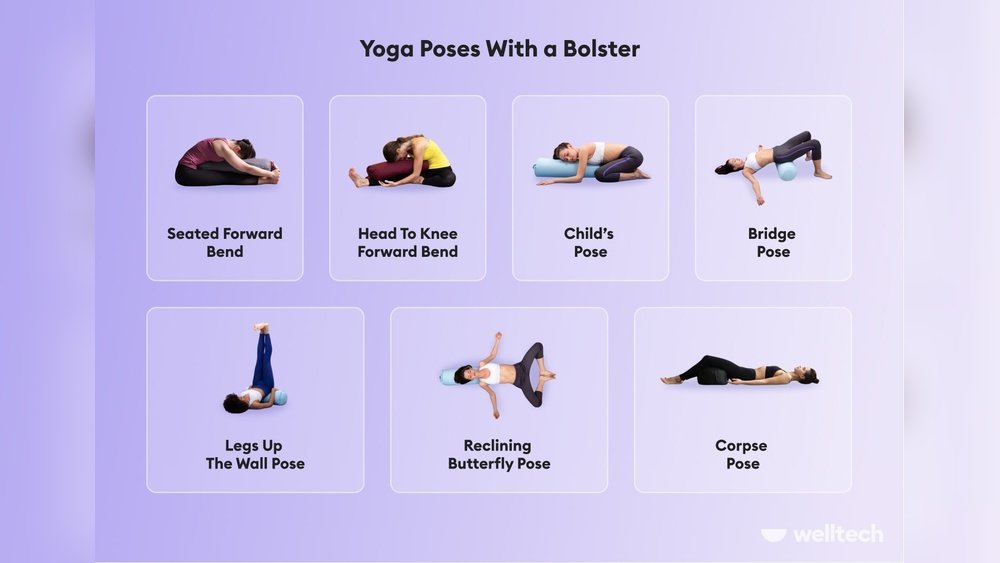
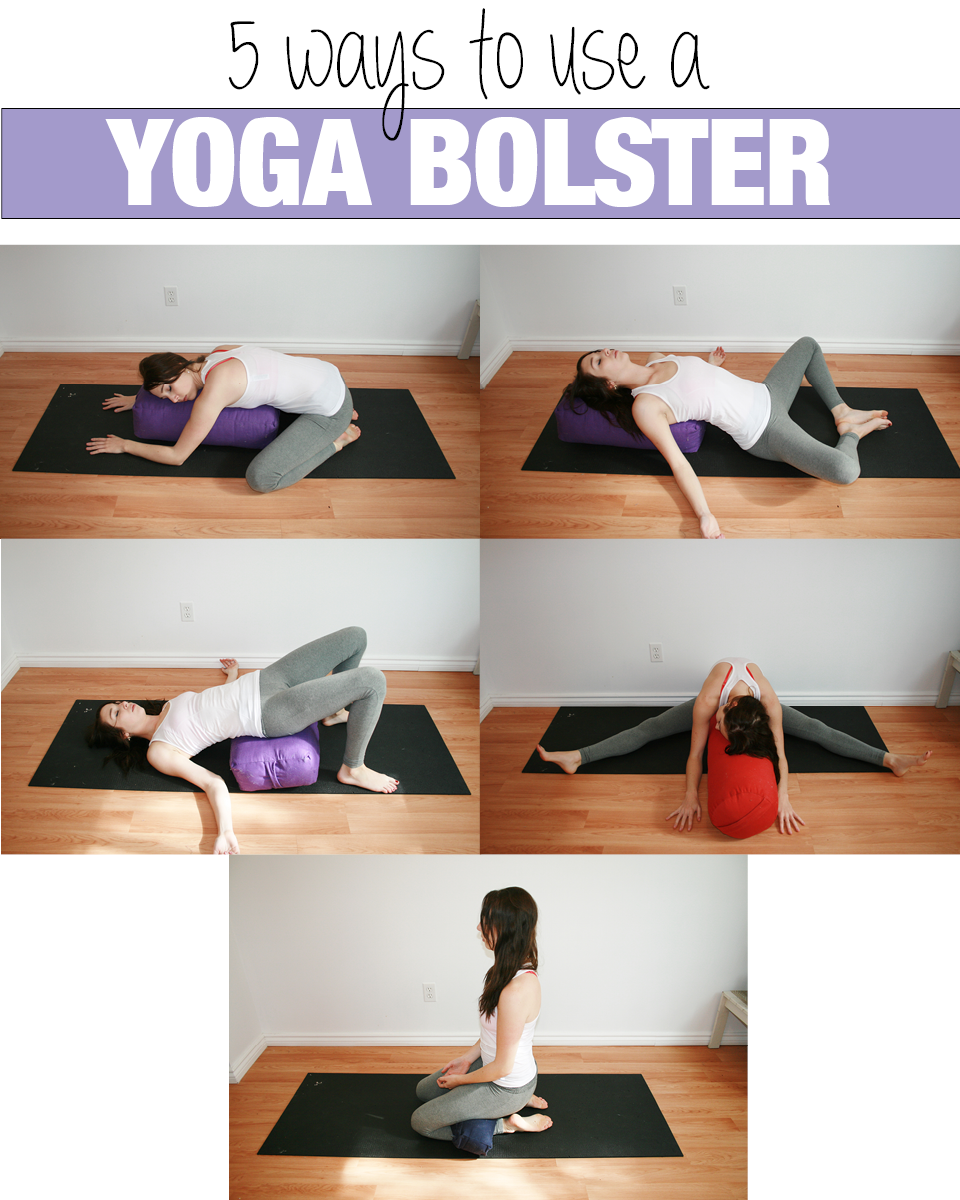
Supported Child’s Pose
Kneel on the floor, big toes touching, knees spread wide. Place the bolster lengthwise between your knees. Lower your body onto the bolster, turning your head to one side. Rest your arms by your sides. This pose gently stretches the back, hips, and shoulders.
Hold for 2–5 minutes, breathing slowly.
Reclined Bound Angle Pose
Sit on the floor with knees bent and soles of feet together. Lay the bolster behind you, aligned with your spine. Lean back so your upper body rests on the bolster. Let your arms relax at your sides and let your knees drop open.
This opens the chest, hips, and inner thighs, while supporting the lower back.
Supported Bridge Pose
Lie on your back with knees bent and feet flat on the floor, hip-width apart. Lift your hips and slide the bolster under your sacrum (the flat part of your lower back). Rest your pelvis on the bolster, arms at your sides.
This pose reduces pressure on your spine and helps release the hip flexors.
Legs Up The Bolster
Place the bolster against a wall. Sit sideways next to it, then swing your legs up onto the bolster and wall, lying down with your back flat. Your legs are now elevated. This improves circulation, reduces swelling, and calms the nervous system.
Bolster Twist
Sit with your right hip close to the short end of the bolster. Bend your knees to the left. Turn your torso to face the bolster, then lay your chest and belly down on it. Rest your arms and head on the bolster.
This gentle twist stretches the spine and massages the organs.
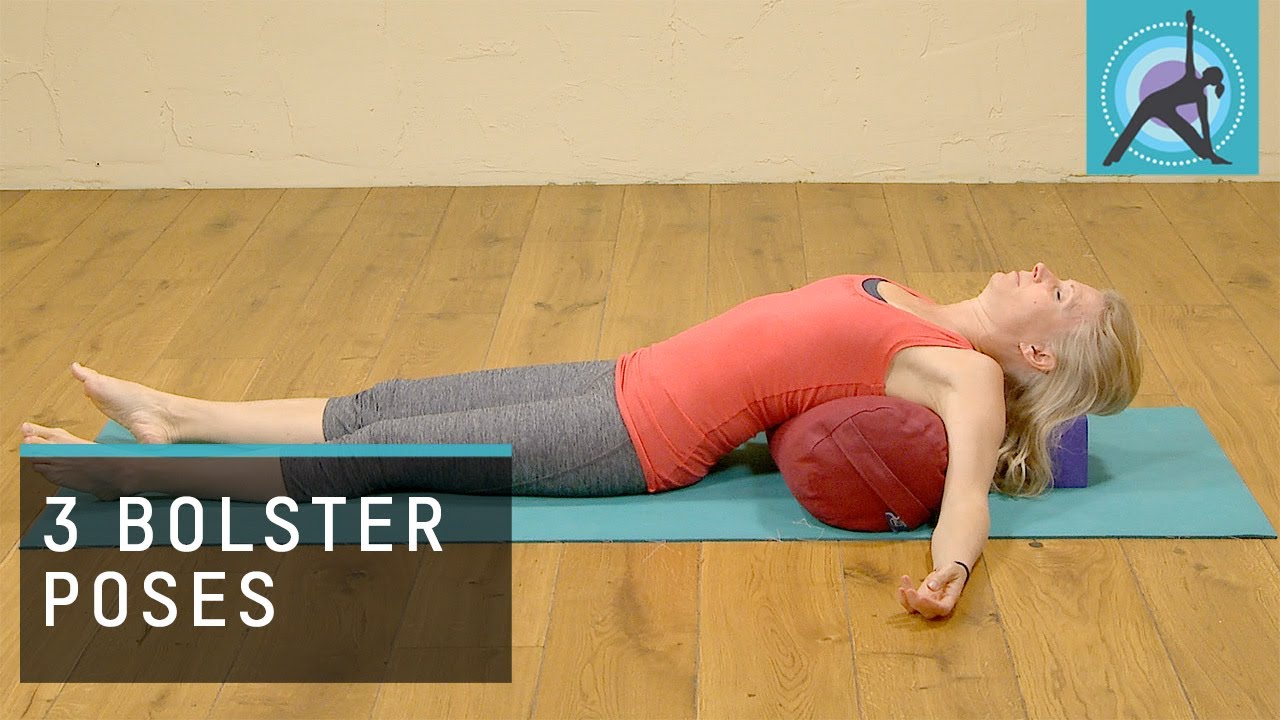
Supported Fish Pose
Sit with the bolster behind you, aligned with your spine. Lie back so your chest is lifted and your head is supported. Extend your arms out to the sides. This opens the heart, chest, and shoulders—great for people who spend long hours at a desk.
Restorative Savasana
Lie on your back with a bolster under your knees or knees bent over the bolster. Let your arms relax by your sides. This position releases tension in the lower back and helps you rest fully.
Prone Chest Opener
Lie face down, arms out in a T shape, with the bolster under your chest. Turn your head to one side. This gently stretches the chest, shoulders, and neck.
Side-lying Release
Lie on your side with your lower arm extended and your head resting on the bolster. Hug another bolster or pillow to your chest. This position is good for people with back pain or during pregnancy.
How To Choose The Right Bolster
Not all bolsters are the same. Here’s a quick overview of key features:
| Feature | What to Look For | Why It Matters |
|---|---|---|
| Shape | Round or rectangular | Rectangular is more stable; round offers deeper support |
| Firmness | Medium to firm | Soft bolsters collapse; firm ones hold your weight |
| Length | 24–28 inches (60–70 cm) | Should support your whole torso |
| Material | Cotton, foam, or buckwheat | Natural materials are more breathable |
| Cover | Removable/washable | Keeps the bolster clean |
Tip: If you sweat a lot or use the bolster outdoors, choose a cover that can be washed easily.
Credit: www.youtube.com
Bolster Exercises For Different Goals
You can use bolster exercises for many purposes. Here’s how to adjust your routine for specific goals.
Flexibility
If your goal is to become more flexible, hold each pose for 2–5 minutes. Focus on slow, deep breathing. Supported Child’s Pose, Reclined Bound Angle, and Supported Fish Pose are excellent choices.
Pain Relief
For back pain or tight hips, try Supported Bridge Pose, Restorative Savasana, and Side-Lying Release. Use the bolster to keep your body in a neutral position and avoid overstretching.
Stress Reduction
To relax deeply, choose Legs Up the Bolster, Supported Child’s Pose, and Prone Chest Opener. Stay in each pose for up to 10 minutes, focusing on relaxing every muscle and letting your breath slow down.
Posture Improvement
If you sit at a desk or drive a lot, your chest and shoulders can get tight. Supported Fish Pose and Prone Chest Opener help open the chest and reverse slouching.
Pregnancy
Pregnant people often use bolster exercises for comfort and safety. Side-Lying Release and Legs Up the Bolster are gentle, supportive poses during pregnancy. Always check with a healthcare provider before starting new exercises.
Common Mistakes And How To Avoid Them
Bolster exercises are safe, but people sometimes make mistakes that reduce their benefits.
1. Using A Soft Pillow Instead Of A Firm Bolster
A regular pillow will squash under your weight, making the pose unstable. Use a real bolster or a tightly rolled blanket.
2. Holding Your Breath
Many beginners forget to breathe deeply during poses. Focus on long, slow inhales and exhales.
3. Overstretching
The goal is comfort, not pain. If you feel sharp discomfort, adjust the bolster or come out of the pose.
4. Not Aligning The Bolster Properly
If the bolster is not centered under your spine or legs, it won’t support you. Take time to set up the pose correctly.
5. Rushing The Process
Bolster exercises work best when you stay in each pose for several minutes. Don’t hurry—relax and let gravity do the work.
Non-obvious insight: People often skip the adjustment phase. Even small changes in bolster position can turn an uncomfortable pose into a deeply relaxing one. Listen to your body and make micro-adjustments as needed.
How Often Should You Practice Bolster Exercises?
There’s no strict rule, but most people benefit from 2–4 sessions per week. Some do a short routine daily, especially before bed. Listen to your body—if you feel less stiff, sleep better, or have less pain, you’re on the right track.
Sample Bolster Exercise Routine
Here’s a simple routine for total relaxation and flexibility. It takes about 20 minutes.
- Supported Child’s Pose – 3 minutes
- Reclined Bound Angle Pose – 3 minutes
- Supported Bridge Pose – 3 minutes
- Bolster Twist (each side) – 2 minutes
- Legs Up the Bolster – 5 minutes
- Restorative Savasana – 4 minutes
Start with shorter holds if you’re new, and increase time as you become more comfortable.

Credit: www.indiamart.com
Comparing Bolster Exercises With Other Stretching Methods
To understand the unique value of bolster exercises, it’s helpful to compare them with other stretching approaches.
| Method | Support | Intensity | Best For |
|---|---|---|---|
| Bolster Exercises | High | Gentle | Relaxation, pain relief, flexibility |
| Static Stretching | None | Moderate | Increasing range of motion |
| Dynamic Stretching | None | Active | Warm-ups, athletes |
| Foam Rolling | Minimal | Intense | Myofascial release, soreness |
Bolster exercises are unique because they combine support, comfort, and deep relaxation with gentle stretching.
Who Should Avoid Bolster Exercises?
Most people can do bolster exercises safely, but certain situations require caution:
- If you have acute injuries (like a recent sprain or fracture), avoid bolster exercises until cleared by a doctor.
- People with severe osteoporosis or joint instability should ask a physical therapist for guidance.
- If you have high blood pressure, avoid poses with legs above the heart unless your doctor approves.
Credit: blog.yogawithkassandra.com
Tips For Getting The Most From Bolster Exercises
- Wear comfortable, stretchy clothing.
- Practice in a quiet space with soft lighting.
- Use a timer to avoid checking your phone.
- Combine with slow music or guided meditation for deeper relaxation.
- Clean your bolster regularly, especially if you sweat or use it on the floor.
Where To Learn More
If you want to explore further, many yoga studios and online platforms offer classes that include bolster exercises. For research on their effects, see this NIH study on restorative yoga.
Frequently Asked Questions
What Is The Difference Between A Bolster And A Regular Pillow?
A bolster is firmer and holds its shape under your weight, giving better support for exercises. Regular pillows are softer and can collapse, making poses unstable or less effective.
Can I Use Bolster Exercises If I Have Back Pain?
Yes, many people with back pain find relief using bolsters. Poses like Supported Bridge and Restorative Savasana are especially helpful. However, always check with a doctor if your pain is severe or sudden.
How Long Should I Hold Each Bolster Exercise?
Most people hold bolster poses for 2–5 minutes. For deep relaxation, you can stay up to 10 minutes, as long as you remain comfortable and breathe easily.
Can Children Or Older Adults Do Bolster Exercises?
Yes, bolster exercises are safe for most ages. Children, older adults, and people with limited mobility can all benefit. Adjust positions for comfort, and supervise children to prevent falls.
How Do I Clean And Care For My Bolster?
Most bolsters have a removable cover that you can wash. Wipe the inner bolster with a damp cloth if needed. Store in a dry, clean place to prevent mold and odors.
Bolster exercises are a simple, powerful way to support your health and well-being. By adding a few gentle movements to your routine, you can improve flexibility, reduce pain, and find moments of peace in a busy world. Listen to your body, explore new poses, and enjoy the journey to better movement and relaxation.