Many people want to practice yoga but do not always have a traditional yoga mat available. Maybe you forgot yours at home, or perhaps you want to find something more eco-friendly, affordable, or better for your body. The good news is, you can still enjoy all the benefits of yoga without a standard mat. In fact, there are plenty of yoga mat alternatives that work well for both beginners and experienced yogis. Some of these options might even surprise you with how practical and comfortable they are.
This guide covers the most effective yoga mat substitutes, including their pros, cons, and when to use them. You’ll also learn what to consider before choosing an alternative, mistakes beginners often make, and creative ideas that can make your practice more enjoyable.
By the end, you’ll know exactly which option is best for your needs, whether you’re at home, in a park, or traveling.
Why Look For Yoga Mat Alternatives?
A yoga mat is helpful, but it’s not always the only or the best choice. There are several reasons people search for other options:
- Cost: Good-quality yoga mats can be expensive, especially for beginners.
- Portability: Mats can be bulky or heavy for travel.
- Eco-friendliness: Many mats are made from PVC or plastics, which are not earth-friendly.
- Comfort: Some people find mats too thin, slippery, or uncomfortable.
- Accessibility: Not everyone owns a mat or has one available when needed.
Knowing about alternatives gives you the flexibility to practice yoga wherever you are, with comfort and safety.
Top Yoga Mat Alternatives
Let’s explore the most popular and effective options you can use instead of a standard yoga mat. Each has its strengths and weaknesses, so you can decide what fits your situation best.
1. Large Towel
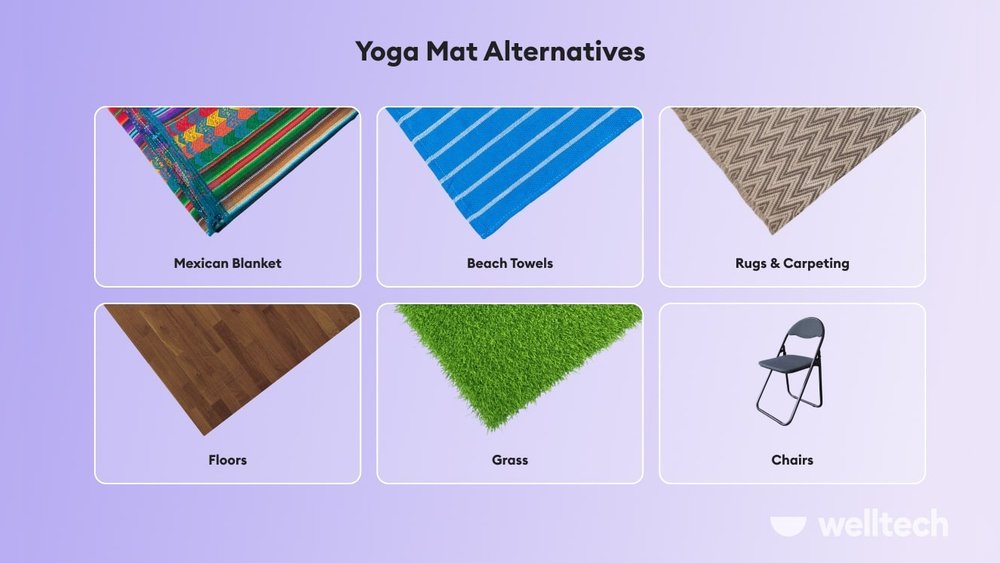
A large towel is the most common substitute, especially in hotels or at the beach. Bath towels are soft, absorbent, and easy to wash. They provide some cushioning and grip, but you may need to double up if your floor is very hard.
Pros:
- Readily available in most homes
- Easy to wash and dry
- Good for travel
Cons:
- Can bunch up during movement
- May not be thick enough for joint support on hard floors
- Less grip compared to a mat
2. Blanket
Thicker than most towels, a blanket offers more padding for your knees and elbows. Wool or cotton blankets are popular choices. They’re especially useful for restorative or yin yoga, where you hold poses longer.
Pros:
- Extra cushioning
- Can be folded for more thickness
- Warm and cozy for slower practices
Cons:
- Heavy or bulky to carry
- May slide on smooth floors
- Not ideal for dynamic yoga styles
3. Carpet Or Rug
Practicing yoga on a carpet or rug is very common at home. Carpets naturally provide grip and comfort, especially for gentle or meditative yoga.
Pros:
- Good cushioning for joints
- Stable surface for most poses
- No need for extra equipment
Cons:
- Can be slippery with socks
- Hard to clean sweat or spills
- Not portable
4. Grass Or Sand (outdoor Yoga)
Nature offers its own solutions. Practicing on grass in a park or sand at the beach adds variety and a new challenge. These surfaces are gentle on the body and connect you to the earth.
Pros:
- Free and accessible in public spaces
- Soft for joints, especially sand
- Fresh air and nature boost mood
Cons:
- Uneven ground can make balance harder
- Grass can be wet or muddy
- Sand may get everywhere
5. Exercise Mat
An exercise mat is thicker and often used for workouts like Pilates. It offers more padding than a yoga mat but may be less grippy.
Pros:
- Extra thickness for comfort
- Suitable for floor-based yoga styles
- Often affordable
Cons:
- May be too soft for balancing poses
- Can be bulky to carry
- Less grip for hands and feet
6. Foam Tiles
Interlocking foam tiles are popular in playrooms or gyms. They fit together to create a large padded area. This is ideal for families or anyone who wants a bigger practice space.
Pros:
- Customizable size and shape
- Cushions the entire floor
- Easy to clean
Cons:
- Not portable
- May slide on smooth surfaces
- Can wear down with heavy use
7. Cork Sheets
Cork sheets are a natural, eco-friendly alternative. They provide good grip and are firm, making them suitable for standing poses.
Pros:
- Sustainable and biodegradable
- Excellent grip even when wet
- Naturally antimicrobial
Cons:
- Can be expensive
- Not as soft as some options
- Limited availability in stores
8. Yoga Towel
A specialized yoga towel is made to fit over a yoga mat, but it can also be used alone. It offers better grip than a regular towel, especially when wet.
Pros:
- Designed for yoga, so it stays in place
- Absorbs sweat for hot yoga
- Easy to wash
Cons:
- Less cushioning than a mat
- Can be pricey
- Needs a non-slip surface underneath
9. Old Bedsheet
An old bedsheet works in a pinch. It’s light, easy to pack, and covers a large area. While not ideal for support, it keeps you clean from dust or dirt.
Pros:
- Lightweight and compact
- Covers large spaces
- Free if you have an old sheet
Cons:
- No padding for joints
- Can slide or bunch up
- Little grip
10. Grass Mats (chatai)
In many Asian countries, woven grass mats (chatai) are traditional for yoga and meditation. They’re natural, cool, and eco-friendly.
Pros:
- Made from natural materials
- Cool and comfortable in hot weather
- Rolls up easily
Cons:
- Little cushioning
- Can be slippery on smooth floors
- May not last as long as synthetic mats
11. No Mat: Bare Floor
Some practitioners prefer the bare floor for grounding and stability. This is best for gentle yoga or meditation, but harder on the joints for long sessions.
Pros:
- Zero equipment needed
- Maximum stability for balance
- Connects you directly to the ground
Cons:
- Hard on the body, especially knees and wrists
- Cold or uncomfortable in winter
- Can be slippery
12. Travel Yoga Mat Substitute
If you travel often, a foldable travel mat or even a shower towel can be a great option. Some people use a microfiber towel, which is light and dries quickly.
Pros:
- Easy to carry
- Dries fast
- Fits in a suitcase or backpack
Cons:
- Less padding than standard mats
- Not as durable for daily use
Comparison Of Yoga Mat Alternatives
To help you choose, here’s a side-by-side comparison of the most popular yoga mat alternatives:
| Alternative | Cushioning | Grip | Portability | Eco-friendly |
|---|---|---|---|---|
| Large Towel | Medium | Low | High | Depends on material |
| Blanket | High | Low | Medium | Yes (natural fibers) |
| Carpet/Rug | High | Medium | Low | Depends |
| Grass/Sand | High | Low | High | Yes |
| Exercise Mat | High | Medium | Medium | No |
| Foam Tiles | High | Low | Low | No |
| Cork Sheet | Medium | High | Medium | Yes |
How To Choose The Best Yoga Mat Alternative
Selecting the right option depends on your needs, space, and style of yoga. Here are key factors to consider:
- Type of Yoga: Gentle yoga (restorative, yin) needs more padding. Dynamic yoga (vinyasa, power) needs better grip.
- Surface Underneath: Hard floors require more cushioning. Carpeted rooms allow for thinner alternatives.
- Portability: If you travel, pick something lightweight like a towel or microfiber cloth.
- Sweat and Hygiene: Some materials absorb sweat better or are easier to clean.
- Eco-friendliness: Natural materials (cotton, wool, cork, grass) are better for the environment.
- Allergies: Avoid materials that may trigger allergies (wool, grass, latex).
Yoga Mat Alternatives For Special Situations
Sometimes, your choice depends on where you are or what you need.
At Home
Most people use a rug, carpet, or blanket at home. You can fold a blanket for extra support or layer a towel on the carpet for sweat absorption.
Outdoors
Grass and sand are perfect outdoors. Remember to check for sharp objects or bugs before starting. A large towel or grass mat is easy to carry to parks or the beach.
While Traveling
For travel, a microfiber towel or a foldable mat fits in your bag. You can also use a hotel bath towel. A pro tip: roll your towel tightly to save space.
For Hot Yoga
If you sweat a lot, a yoga towel is best. It absorbs moisture and gives better grip as it gets wet. Avoid thick blankets, which trap heat.
Mistakes To Avoid When Using Yoga Mat Alternatives
Beginners often make these errors:
- Choosing too little padding: Thin towels or sheets can cause pain during kneeling or sitting poses.
- Ignoring grip: Slippery surfaces increase injury risk, especially for standing or balancing poses.
- Not cleaning surfaces: Blankets, towels, and carpets can collect dust and sweat. Wash them often.
- Practicing on uneven ground: Grass and sand are not always flat, which affects your balance and alignment.
- Using unsuitable materials: Some foam tiles or rugs may contain chemicals or allergens. Check before using them.
Extra Tips For Practicing Without A Yoga Mat
- Check your surface: Make sure it’s clean, flat, and free of objects that could hurt you.
- Warm up joints: Extra cushioning is important for your knees and wrists. Use a folded towel under them if needed.
- Go barefoot: Socks can make most surfaces slippery.
- Practice slowly: Move mindfully, especially if you have less grip or stability than a mat provides.
- Try different options: You may need to experiment to find what feels best for your body and practice.
When Is A Traditional Yoga Mat Still The Best?
While alternatives work well, a traditional yoga mat has clear advantages for some people:
- Advanced poses: Inversions and arm balances need maximum grip and stability.
- Daily practice: Mats are designed for repeated use and easy cleaning.
- Group classes: Studios often require mats for hygiene and consistency.
Still, knowing your options means you’ll never have to skip a session, no matter where you are.

Credit: www.thewellnesscorner.com
A Quick Look: Pros And Cons At A Glance
Here’s a summary to help you decide quickly:
| Alternative | Best For | Downside |
|---|---|---|
| Large Towel | Travel, home, emergency | Less grip |
| Blanket | Restorative yoga, comfort | Bulky, can slip |
| Carpet/Rug | Home, gentle yoga | Not portable |
| Grass/Sand | Outdoor sessions | Uneven, messy |
| Exercise Mat | Pilates, gentle yoga | Too soft for balance |
| Cork Sheet | Eco-friendly, sweaty hands | Expensive |
Surprising Insights Most People Miss
- Grip improves with sweat on yoga towels and some cork mats—so don’t worry if your hands get damp.
- Layering two or more alternatives (like a towel on carpet) often creates a better practice space than using one on its own.
- Some hotel chains now offer complimentary yoga kits (mat, towel, block) at the front desk—ask before you pack.
Credit: www.doyou.com
Where To Learn More
For more detailed comparisons, you can visit Healthline, which provides expert advice on yoga equipment and alternatives.
Frequently Asked Questions
What Is The Best Yoga Mat Alternative For Beginners?
For most beginners, a large towel or blanket is best. They’re soft, easy to use, and available in almost every home.
Can I Do Yoga On My Carpet?
Yes, you can. Carpets offer good comfort and are safe for gentle yoga. For hot yoga or intense sessions, layer a towel to absorb sweat and prevent slipping.
Is It Safe To Do Yoga On The Bare Floor?
Practicing on the bare floor is safe for short, gentle sessions. For longer or more intense practice, add cushioning to protect your joints.
Are Yoga Mat Alternatives As Hygienic As Mats?
It depends. Towels and blankets should be washed after use. Grass or sand is naturally clean, but always check for dirt or bugs. Alternatives need regular cleaning, just like mats.
What Should I Avoid When Using Yoga Mat Alternatives?
Avoid surfaces that are too hard, slippery, or dirty. Check for allergens, sharp objects, and make sure your support is enough for the poses you plan to do.
No matter which yoga mat alternative you choose, the most important thing is to make your practice enjoyable and safe. With a little creativity, you can do yoga almost anywhere, anytime.
Credit: youaligned.com