Many women turn to yoga for comfort and strength during pregnancy, and Child’s Pose is one of the most loved positions. This gentle, resting posture can bring relief to the body and mind during a time of big changes. But how safe is Child’s Pose for pregnant women? What adjustments do you need to make? And what are the hidden benefits and risks that beginners often miss? Let’s explore everything you need to know about practicing Child’s Pose while pregnant, so you can enjoy its calming power safely.
What Is Child’s Pose?
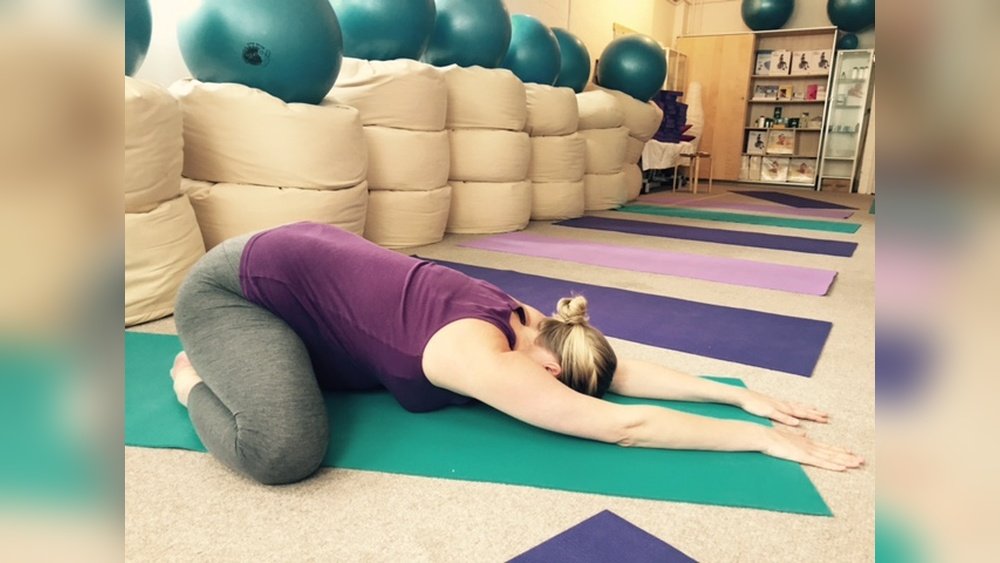
Child’s Pose, called Balasana in Sanskrit, is a basic yoga posture often used for relaxation and stretching. In this pose, you kneel on the floor, sit back on your heels, and fold forward, resting your forehead on the mat with arms stretched out in front or relaxed by your sides. It’s a grounding position that helps release tension in the back, shoulders, and hips.
For most people, Child’s Pose feels safe and comforting. However, pregnancy adds new considerations. Your body shape changes, your joints become more flexible, and your center of balance shifts. Adapting the pose is essential to keep you and your baby safe.
Why Practice Child’s Pose During Pregnancy?
Child’s Pose offers special benefits for pregnant women. It is gentle, doesn’t strain the body, and can be easily modified. Here’s why many prenatal yoga teachers recommend it:
- Relieves lower back pain: Pregnancy often causes tightness in the lower back. This pose gives a gentle stretch and helps relax those muscles.
- Reduces stress and anxiety: The forward fold and deep breathing help calm the mind and nervous system.
- Improves pelvic floor awareness: Focusing on your breath and pelvic area can support easier labor later.
- Aids digestion: The position encourages gentle movement in the abdomen, which can ease bloating and constipation.
- Restores energy: It’s a restful pose that you can hold for several minutes to recharge.
But there’s more to gain with proper practice and awareness.
How To Do Child’s Pose Safely While Pregnant
During pregnancy, you should always listen to your body and avoid discomfort or pain. Here’s a step-by-step guide to a safe Child’s Pose:
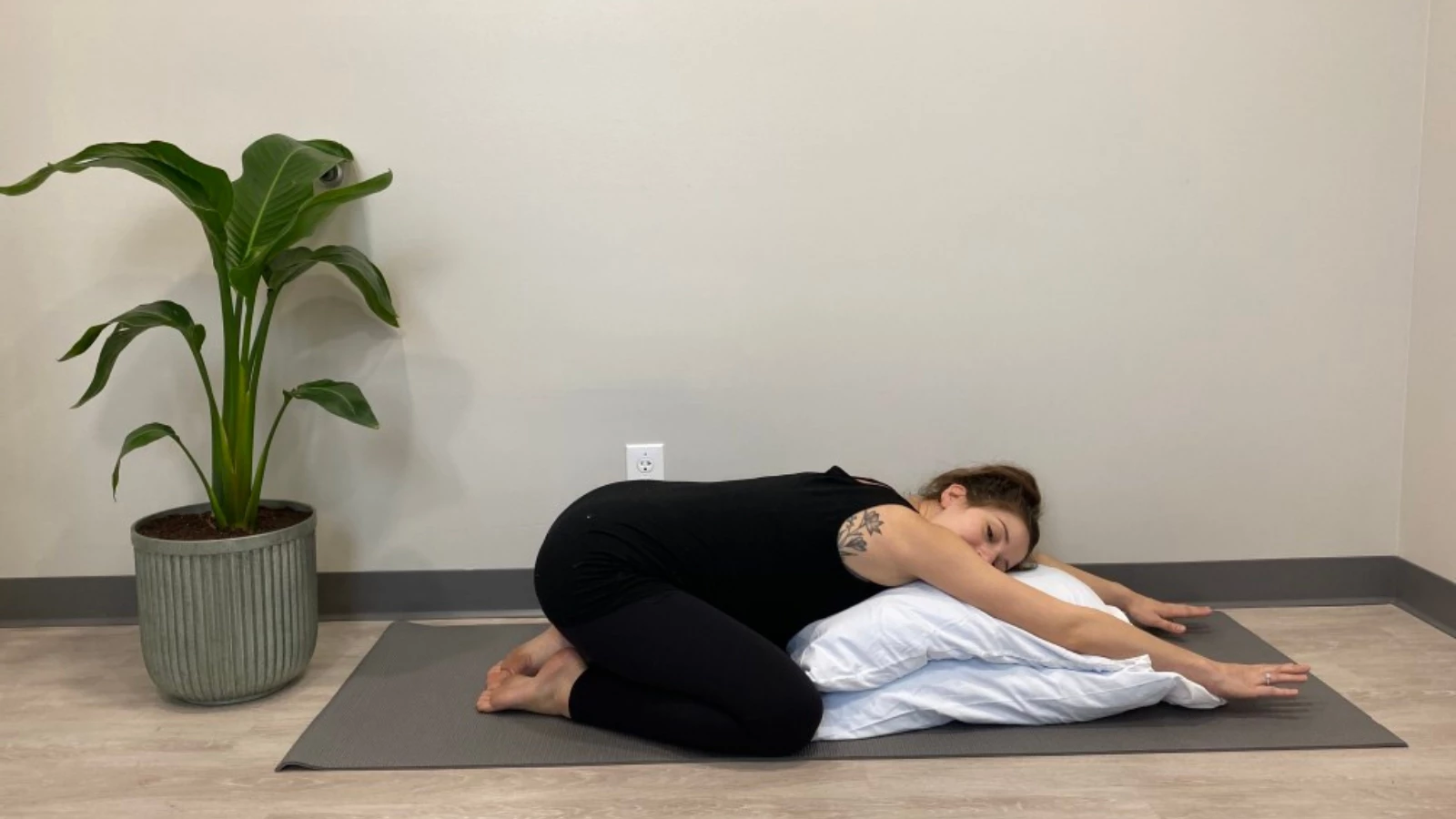
- Start on hands and knees: Place your knees as wide as your mat or wider to make space for your belly.
- Bring your big toes together: This helps with stability but is not required if it feels uncomfortable.
- Gently sit back: Lower your hips toward your heels. If your hips don’t touch, that’s fine.
- Fold forward: Walk your hands forward, lowering your chest between your thighs.
- Rest your forehead: Place it on the mat, a block, or a rolled towel for support.
- Keep your arms extended: Or, for more shoulder release, let your arms rest by your sides, palms facing up.
- Breathe deeply: Feel your belly expand and soften with each inhale. Hold for 30 seconds to 2 minutes.
The most important change is widening your knees to create space for your growing belly. Never force yourself down; always move gently.
Modifications And Props For Pregnancy
Pregnancy is a time to use as many props as you need. They are not just for beginners! Here are helpful ways to make Child’s Pose more comfortable:
- Blankets under knees or shins: For extra cushioning, place a folded blanket under your knees or between calves and thighs.
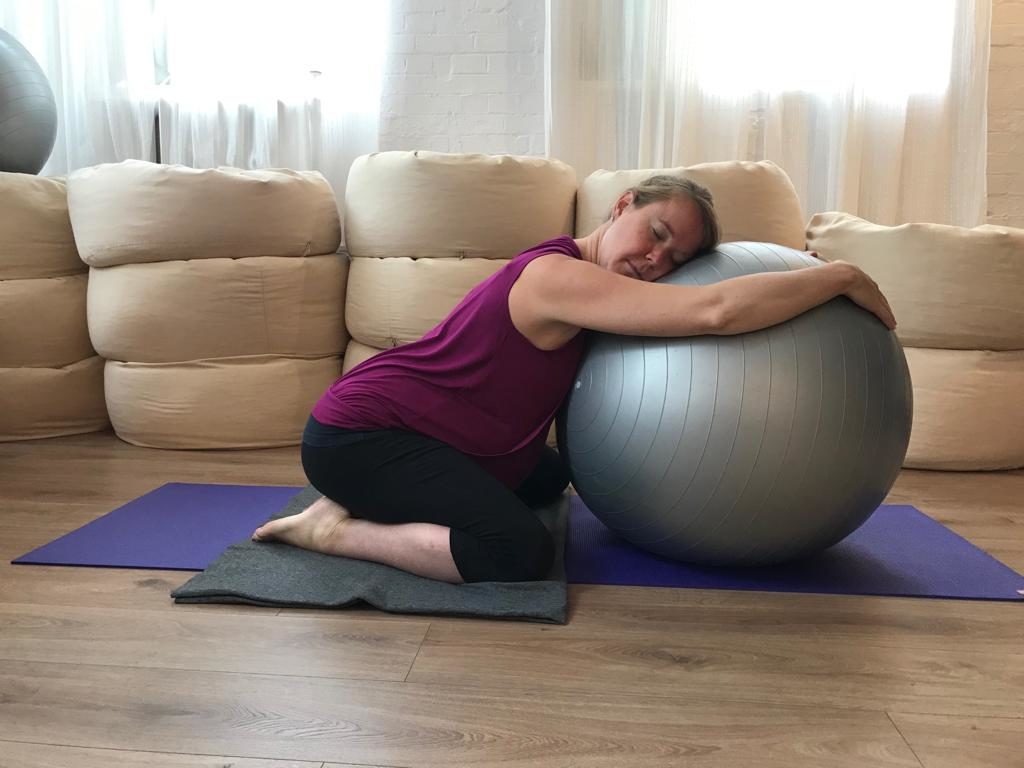
- Bolster or pillow under chest: If you can’t fold all the way forward, hug a bolster or pillow. This keeps pressure off your belly.
- Blocks under forehead: If the floor feels too far, rest your forehead on a yoga block.
- Arms by your sides: If shoulders are tight, let your arms relax back instead of stretching forward.
Using props is not cheating. Many advanced practitioners use them for support. During pregnancy, your comfort and safety come first.
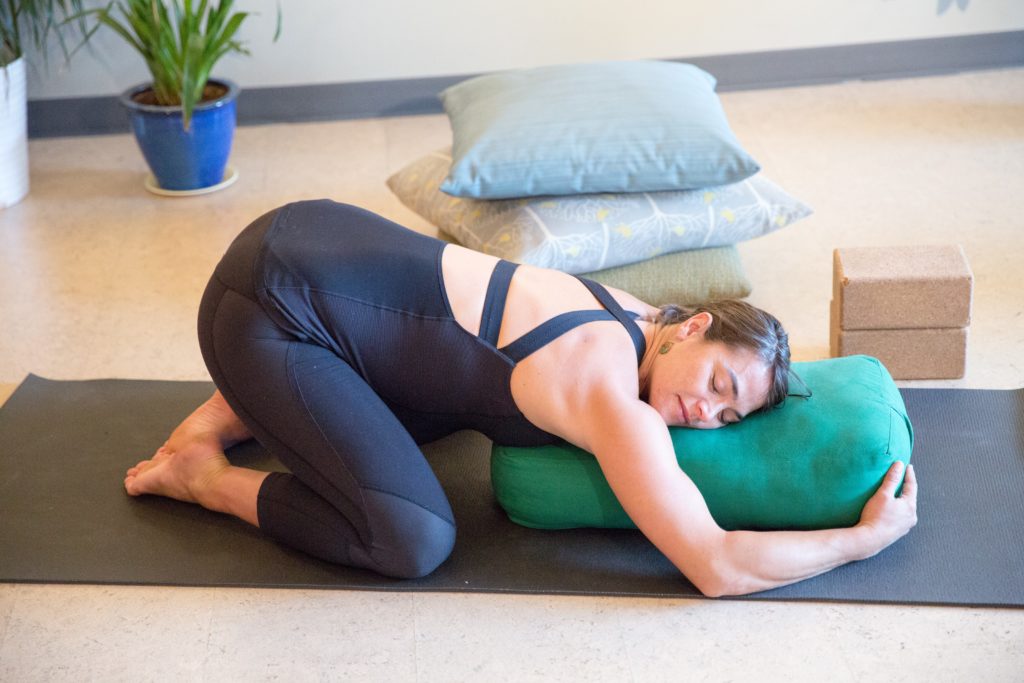
Credit: blooma.com
When To Avoid Child’s Pose In Pregnancy
While Child’s Pose is usually safe, there are times you should avoid it or talk to your healthcare provider first:
- Placenta previa: If you have a low-lying placenta or are told to avoid forward bending.
- High blood pressure: The head-down position can increase pressure.
- Severe pelvic pain or SPD (Symphysis Pubis Dysfunction): Wide knees may worsen discomfort.
- Severe reflux or heartburn: The forward fold may make these worse.
If you ever feel dizzy, short of breath, or have pain in the pose, come out slowly. Always check with your midwife or doctor before starting any yoga routine.
Key Benefits Of Child’s Pose For Pregnant Women
Let’s look closer at the science and experience behind the benefits of Child’s Pose during pregnancy. Below, you’ll find a helpful overview.
| Benefit | How It Helps During Pregnancy |
|---|---|
| Relieves Back Tension | Stretches and relaxes muscles strained by baby weight |
| Calms the Mind | Promotes relaxation through gentle forward folding and breath focus |
| Opens the Hips | Wider knee position releases hip tightness and prepares for labor |
| Improves Sleep | Reduces stress and body discomfort, which can help with better rest |
| Aids Digestion | Gentle pressure supports bowel movement and reduces bloating |
Two surprising benefits: Many women find that Child’s Pose helps them connect emotionally with their growing baby, as the position encourages turning inward and focusing on the breath. Also, practicing this pose regularly can help the body remember how to rest and recover quickly, which is very useful during labor and postpartum.
Common Mistakes And How To Fix Them
Even though Child’s Pose looks simple, there are common mistakes—especially in pregnancy. Here’s what to watch for and how to correct them:
- Knees too close together: This puts pressure on the belly. Always widen your knees for space.
- Forcing hips to heels: It’s fine if your hips stay high. Use a cushion if needed.
- Holding your breath: Focus on slow, deep breathing. If you find yourself tense, try exhaling with a sigh.
- Ignoring pain: If you feel pain (not just mild stretching), adjust or stop.
- No props: Many women avoid using props because they think it’s not “real yoga.” Props are essential for comfort and safety.
Non-obvious insight: Some women feel tingling in their hands or legs during Child’s Pose. This can be from nerves being pressed. If this happens, adjust your position, and don’t hold the pose too long.
Comparing Child’s Pose To Other Prenatal Yoga Poses
Is Child’s Pose the best posture for rest during pregnancy? Here’s a comparison with two other popular prenatal poses.
| Pose | Main Benefit | When to Use | Special Precautions |
|---|---|---|---|
| Child’s Pose | Back and hip release | Anytime you need rest or grounding | Widen knees, use props for belly space |
| Cat/Cow | Spinal mobility | Warm-up, relieve back tension | Move gently, avoid if wrists are sore |
| Supported Butterfly | Hip opening and pelvic floor relaxation | After sitting long periods | Support knees with cushions |
Child’s Pose is often chosen for its simplicity and the option to hold it for longer periods. However, mixing it with other poses gives a more balanced practice.
Tips For Getting The Most From Child’s Pose During Pregnancy
To make the most of Child’s Pose, try these practical tips:
- Practice after meals: If you feel bloated or have gas, this pose can help, but don’t do it on a full stomach.
- Combine with breathwork: Try “ocean breath” (Ujjayi) or slow belly breathing to calm your nervous system.
- Use it as a reset: If you feel overwhelmed, take a break in Child’s Pose, even if just for a minute.
- Try with music: Soft, calming music can make this pose even more relaxing.
- Partner support: Ask your partner to gently massage your lower back while you hold Child’s Pose for extra relief.
Non-obvious tip: During late pregnancy, you might find it hard to reach the floor with your arms. Place your hands on a chair seat in front of you for support.
When To Practice Child’s Pose In Your Pregnancy Yoga Routine
You can include Child’s Pose at different points during your yoga routine:
- As a warm-up: To gently stretch before more active poses.
- As a rest: Between challenging movements, to recover your breath.
- At the end: For deep relaxation before finishing.
Holding the pose for 1–3 minutes is usually enough. If you feel good, you can stay longer, but always listen to your body.
Here’s a simple sample routine for pregnant women:
| Step | Pose | Duration |
|---|---|---|
| 1 | Cat/Cow | 1–2 minutes |
| 2 | Child’s Pose | 2–3 minutes |
| 3 | Supported Butterfly | 2 minutes |
| 4 | Side-lying Savasana | 3–5 minutes |
This routine is gentle, safe, and focuses on relaxation and flexibility.
Credit: yogauonline.com
Special Considerations For Each Trimester
Pregnancy changes quickly, and your approach to Child’s Pose should change with it.
First Trimester
You may not need many modifications. Listen to your body, and focus on deep, relaxed breathing. If you feel nauseous, do not stay in the pose too long.
Second Trimester
Your belly starts to grow. Widen your knees and use props under your chest and head. Avoid folding too deeply.
Third Trimester
Make lots of space for your belly with very wide knees. Use extra props under your chest, head, and even under your hips if you feel strain. Move in and out of the pose slowly to avoid dizziness.
Emotional And Mental Benefits
Pregnancy isn’t just physical—it brings emotional ups and downs. Child’s Pose creates a safe space for mindfulness, self-connection, and even bonding with your baby. Many women find it’s a good time to:
- Focus on the baby’s movements
- Practice positive affirmations
- Visualize a healthy, calm birth
This mental break is as important as the physical rest.
Credit: www.activebirthcentre.com
How Often Should You Practice?
You can do Child’s Pose daily if it feels good. Many prenatal yoga teachers suggest 3–4 times per week for best results. Even a few minutes can bring calm and comfort.
If you have any doubts, talk to your doctor or a certified prenatal yoga teacher. They can help you adjust the pose for your unique needs.
Frequently Asked Questions
Is Child’s Pose Safe For All Pregnant Women?
Child’s Pose is safe for most pregnant women, but not all. If you have a high-risk pregnancy, certain medical conditions, or any discomfort, check with your doctor first. Always listen to your body.
How Do I Modify Child’s Pose For A Bigger Belly?
Widen your knees as much as needed. Use a bolster or pillow under your chest for support, and a block under your forehead if you can’t reach the floor. Props are your friend!
Can I Do Child’s Pose In The Third Trimester?
Yes, you can, with extra modifications. Keep your knees wide, add lots of support, and move slowly. Some women prefer a more upright “puppy pose” if Child’s Pose is uncomfortable.
What Should I Do If I Feel Pain In Child’s Pose?
Stop immediately. Pain is not normal in this pose. Adjust your position, use more props, or skip the pose. If pain continues, talk to a prenatal yoga teacher or healthcare provider.
Where Can I Learn More About Prenatal Yoga Poses?
You can find reliable information from prenatal yoga books, certified teachers, and trusted sources like Yoga Journal.
Pregnancy is a unique journey, and yoga can be a gentle companion along the way. With careful practice and a focus on comfort, Child’s Pose can give you moments of peace, relief, and connection. Always honor your body’s signals, and enjoy this special time with kindness to yourself.